Prostatic urethral lift is a minimally invasive surgery for treating benign prostatic hyperplasia (BPH). The surgery aims to physically widen the urethra compressed by prostatic enlargement. Doctors implant several small permanent implants through the urethra. These implants lift and hold the obstructing tissue away from the urethra to widen the passage, preventing it from obstructing the urethra, thereby restoring smooth urine flow.
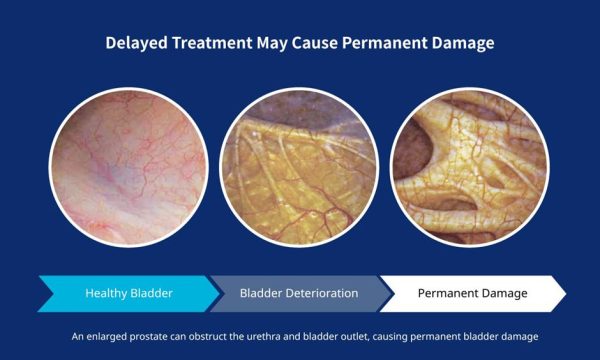
Delayed treatment may lead to permanent bladder damage.
When benign prostatic hyperplasia (BPH) is untreated, the enlarged prostate continues to obstruct the urethra, forcing the bladder to overwork. The bladder wall may progress from healthy to deteriorated over time, and eventually cause irreversible damage.
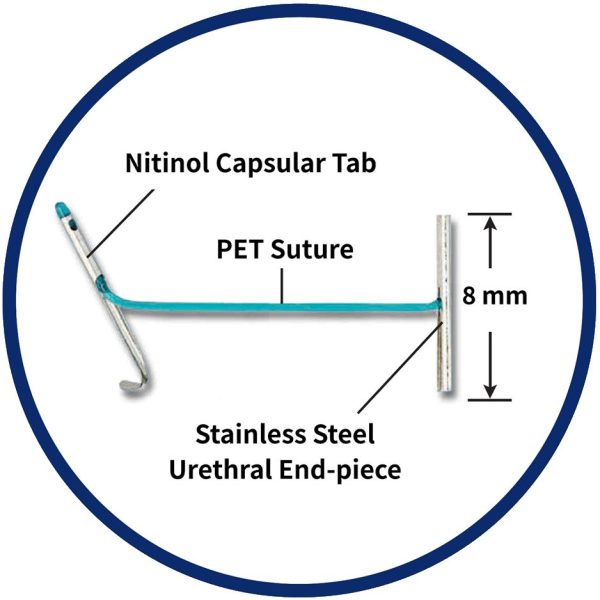
UroLift Implant Structure
The implant consists of three components: a Nitinol capsular tab, a PET suture, and a stainless steel urethral end-piece measuring approximately 8 mm. Together, they gently retract and hold the enlarged prostate tissue aside, restoring an open urethral channel.
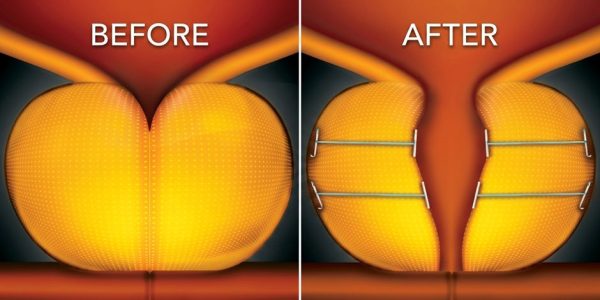
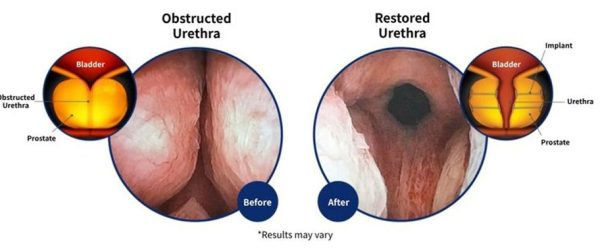
Before and After Comparison
Before treatment: The enlarged left and right prostate lobes compress inward, narrowing or closing the urethra.
After treatment: The implants retract and anchor the prostate tissue laterally, reopening the urethral channel for normal urine flow.